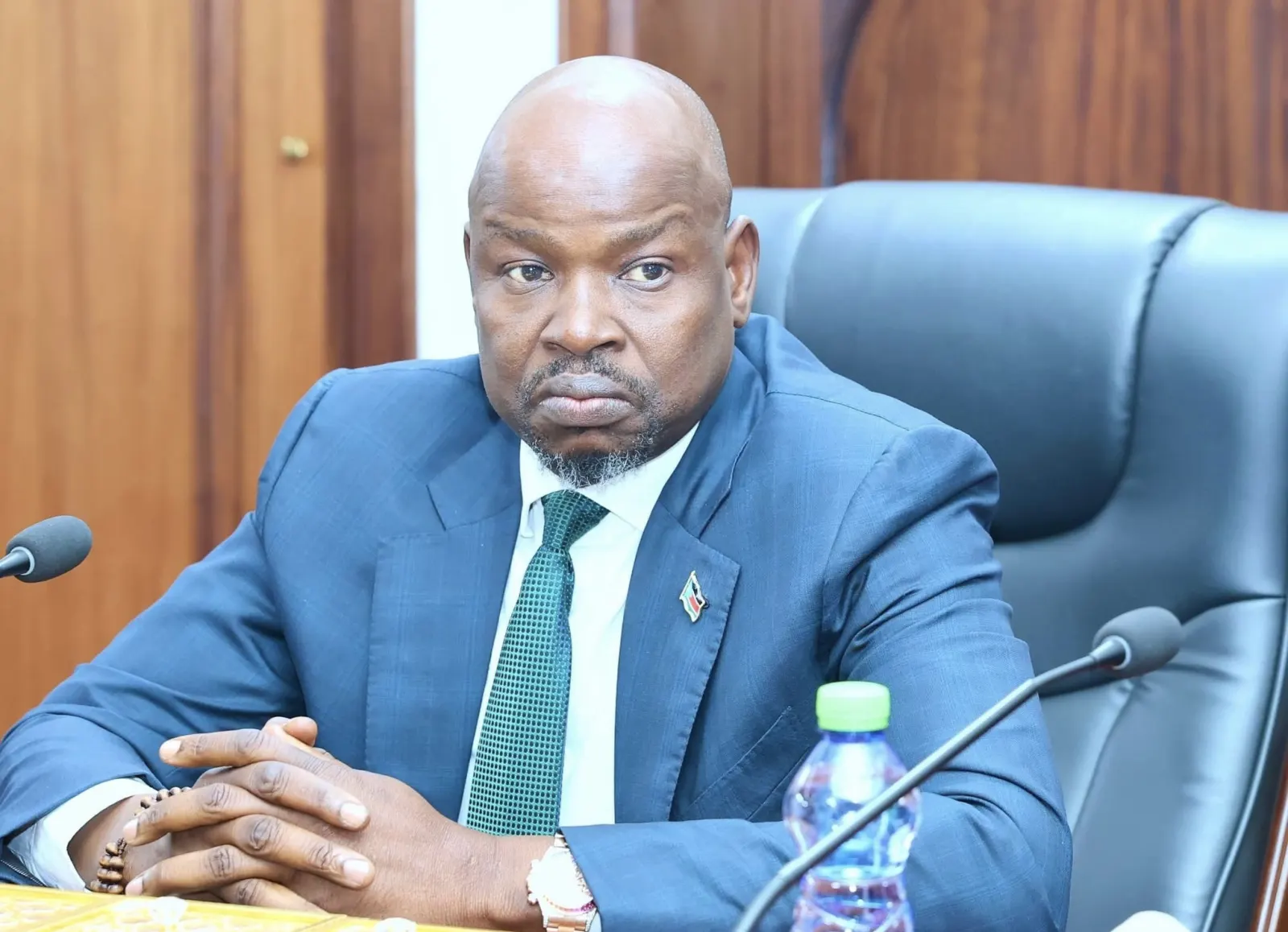
Gola Boyoi Gola is a public servant, political leader and development advocate whose life journey has been shaped by resilience, service and a deep commitment to the people of the Greater Pibor Administrative Area. Born on 1 January 1986 in Nyerdede, Jom, Pibor County, Gola is from the Murle community of Lothila Payam, Gumuruk County. He grew up in Pibor and experienced the hardships of conflict and displacement from an early age. During the liberation struggle, Gola lost his father and was raised by his mother, who supported the family through a small tea business. Her determination and sacrifice became one of the strongest influences on his character. From her, he learned hard work, humility, resilience and self-reliance—principles that continue to guide his approach to Public service.
Education and Professional Formation:
Gola began his primary education at Pibor Basic School in 1991. Because of the conflict, he and his family fled to Panyado Refugee Camp in Ethiopia. He returned to Pibor in 1992 and continued his education, completing primary school in 2003. He later attended Supiri Secondary School in Juba before continuing his secondary education at Tahadi Secondary School in Omdurman, Khartoum, Sudan, where he obtained the Sudan Secondary School Certificate in 2006. Gola subsequently enrolled at Al-Neelain University in Khartoum in 2006, where he studied Political Science and graduated in 2012 with an Honours Bachelor's Degree. He is currently pursuing a master's degree in Security Management at Egerton University in Kenya, where he is working on his thesis. His academic background in Political Science gave him a foundation in governance, public administration, political institutions, and leadership.
Military Service and Leadership Formation:
In 2014, Gola began military training at the Mapel Training Centre and was later commissioned as a First Lieutenant. He served in the military until 2019. He was promoted to Captain and, after serving as Chief Administrator in 2025, was promoted to Colonel.
His military experience strengthened his understanding of discipline, responsibility, teamwork, leadership and the importance of organised institutions. In 2019, he transitioned into youth leadership and politics, entering electoral politics and successfully contesting a competitive youth leadership position. He served as Chairperson of the South Sudan National Youth Union from 2019 to 2023 and resigned after his term ended.
In the same year, he went for the Mandela Washington Fellowship for African Leaders, and he was selected to do his fellowship in Public Administration at Syracuse University, New York. For Gola, this marked an important transition from military service to political and civic leadership. It gave him direct experience in electoral competition, representation, grassroots engagement and the responsibilities of elected leadership.
Experience in Traditional and Community Leadership
Gola's understanding of public administration was further shaped by his work with the late Sultan Ismail Konyi, for whom he served as Executive Director. This experience gave him close exposure to the role traditional institutions play in maintaining social cohesion and resolving community matters. Gola also identified the need for stronger administrative structures, clearer development priorities and effective coordination between traditional authorities and government institutions. This experience strengthened his belief that traditional leadership and formal government institutions must work together to serve communities.
Administration and Service to Pibor
Gola became the Chief Administrator of the Greater Pibor Administrative Area (GPAA) in 2024. He says he entered the position on recommendation rather than through a lobbying campaign. Upon assuming responsibility, he faced the challenge of administering an area that required significant investment in infrastructure, education, health, security, roads and institutions. He worked with government institutions, development partners, traditional leaders and communities to address these challenges and lay the foundations for long-term development.
Development Priorities and Record
During his period of public service, Gola identified and pursued development priorities, including infrastructure, education, transportation, health, security and local economic development.
Among the initiatives associated with his administration are
● Road rehabilitation and improved connectivity between counties within the Greater Pibor Administrative Area, with support from development partners, including WFP.
● Demarcation, town planning and the opening of roads in Pibor town as part of efforts to improve urban planning and connectivity.
● Construction of more than eight classrooms in primary schools across three counties, funded by the World Bank and implemented by the IOM.
● Establishment of a new secondary school in Pibor.
● With support from the Korean Mission in South Sudan (ROK-HMEC), he secured a grant for Pibor. The project is currently being implemented, with completion expected in December 2026.
● Rehabilitation of the Pibor airstrip, with support from the World Bank and the Ministry of Finance.
● Support for the education and health sectors by providing incentives to healthcare workers and teachers, and promoting peace, security and local production.
● Promotion of stronger cooperation between government institutions, traditional leaders, development partners and communities.
● Promotion of peace among age-sets in Pibor town, helping to stop fighting there.
These efforts reflect his broader belief that infrastructure and strong institutions are essential foundations for sustainable development.
Leadership Philosophy
Gola Boyoi Gola believes that leadership is fundamentally about service. His leadership philosophy is built around five principles:
● Service: Public office should be used to serve communities and improve people's lives.
● Accountability: Public leaders should be answerable to the people and responsible for the proper use of public resources.
● Unity: The diversity of communities within Greater Pibor should be treated as a source of strength and cooperation.
● Self-reliance: Communities should be empowered to produce, trade and build sustainable livelihoods rather than depend permanently on external assistance.
● Institution building: Sustainable development requires strong, professional and accountable institutions that can continue serving citizens beyond the tenure of individual leaders.
Professional Formation for Greater Pibor
Gola's vision is to help build a peaceful, connected, productive, modern and self-reliant Greater Pibor Administrative Area. His development vision focuses on several key
Priorities
● A Modern and Green Pibor: Transform Pibor town into a modern, clean and environmentally responsible administrative and commercial centre.
● Road Connectivity: Work towards connecting the seven counties of Greater Pibor through improved roads and transportation networks.
● Agriculture and Food Security: Promote agriculture as a foundation for food security, local production, employment and economic development.
● Education: Continue investment in schools, classrooms and opportunities for young people.
● Healthcare: Improve access to quality basic health services across the Greater Pibor area.
● Peace and Security: Strengthen peacebuilding, community dialogue and security institutions as essential conditions for development.
● Cross-Border Trade: Pursue the opening and development of the border with Ethiopia to facilitate legitimate trade and create new economic opportunities.
● Strong Institutions: Strengthen local government institutions to make public services more effective, accountable and sustainable.
Commitment to Youth: Gola believes that Greater Pibor's future depends heavily on its young people. He advocates greater investment in education, skills development, employment, entrepreneurship and meaningful youth participation in public affairs. His personal experience of being raised by a hardworking single mother has also shaped his appreciation for women's contributions to families and society. He supports greater opportunities for women in education, economic activity, leadership and community development.
The Legacy He Seeks
Gola Boyoi Gola seeks to contribute to a Greater Pibor where children have access to education, roads connect communities, families can produce their own food, citizens have access to healthcare, communities live in peace, and institutions can deliver public services. He aspires to see Pibor recognised not primarily for the challenges it has endured, but for its people, culture, natural environment, tourism potential, agricultural opportunities and growing institutions. He seeks to leave behind a Greater Pibor that is more peaceful, more connected, cleaner, greener, more productive and better prepared for future generations.
A Life Shaped by Service
From a childhood marked by conflict and displacement, through education, military service, youth leadership and public administration, Gola Boyoi Gola's journey has been defined by perseverance and a commitment to public service.
His message to the people of Greater Pibor is that development is possible when communities work together, institutions are strengthened, young people are empowered, women are supported, and public leadership remains focused on serving the people.